Logo animation & brand motion · Complete guide
Logo animation: styles, costs and how to brief one
Updated 11 min readBy the Vizualy Studio teamView as Markdown
TL;DR
- A logo animation is a short motion version of a logo, usually two to four seconds, used to open or close videos and to appear on websites and social profiles.
- Template logo reveals cost about $24, custom 2D reveals start around $150 to $200, and 3D listings start near $700.
- Choose the style by logo shape first (wordmark, monogram, symbol), then by brand personality.
- Ask for a master MP4, a transparent version, vertical, square and widescreen cuts, a silent version and the project file.
- Meta advises branding within the first 3 seconds of an ad video, so most social content needs the logo inside the content, not a separate intro.
On this page
- What is a logo animation?
- What is a logo animation for?
- Do you need a logo animation at all?
- Which logo animation style fits your brand?
- How long should it be, and where does it go?
- What does a logo animation cost?
- Template, freelancer, studio or productized service?
- How do you brief a logo animation?
- What does a brand motion system add?
- The deliverables checklist: what files to ask for
- What should you check before approving it?
- What mistakes should you avoid?
- How does a logo animation project run, step by step?
- How do you roll the animation out across a content library?
- How do you keep the logo consistent when it moves?
- What about animated logos on websites and in email?
- The short version
A logo animation is a short motion version of a logo, usually two to four seconds long, used to open or close videos. Templates cost about $24, custom 2D work starts around $150 to $200 and 3D near $700. Style should follow the logo's shape, and the files you request decide where it works.
What is a logo animation?
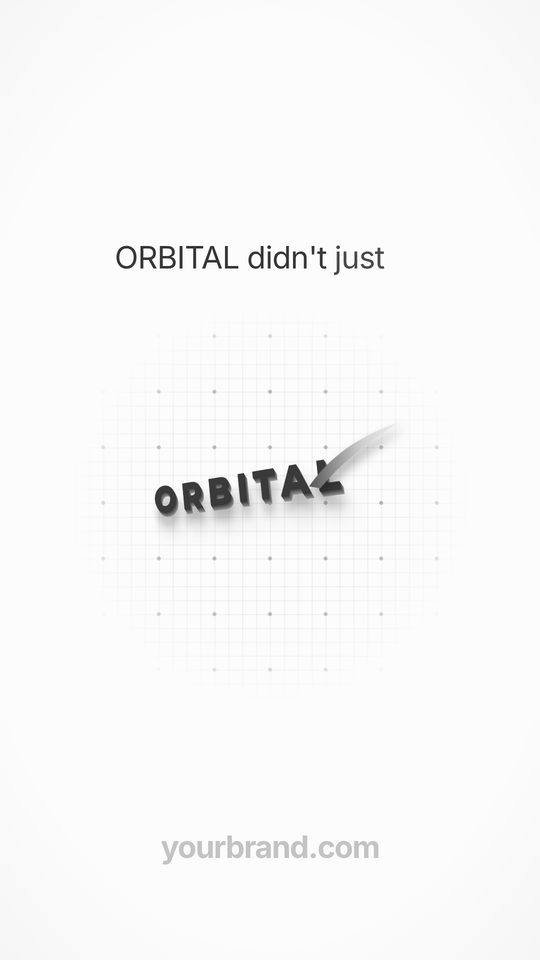
A logo animation is a logo that moves. It starts from nothing, or from a simplified form, and resolves into the finished logo, usually with a short sound. The last frame is the static logo, so the animation is an entrance for something you already have.
People use several names for it: animated logo, logo reveal, logo intro, logo sting. They overlap. A reveal describes how the logo appears. A sting is a reveal with sound, kept short. An intro is a longer opener. Our guide to logo stings, intros and outros separates them properly.
What is a logo animation for?
It does three jobs: recognition, polish and consistency. Recognition comes from seeing the same movement and sound again and again. Polish comes from a finished open and close, which makes ordinary footage look produced. Consistency comes from using one asset across every video.
It is not a conversion tool. A logo animation will not make a weak video persuasive. Treat it as packaging, and spend the rest of the budget on the content.
The most common uses are:
- the open or close of a long video, webinar or recorded training
- the end of a short social video or ad
- a client report or proposal video
- a website hero, loading state or email signature
- a transparent overlay that editors drop on top of footage
Do you need a logo animation at all?
You need one if you publish video regularly, if more than one person edits it, or if a client expects a finished look. You can skip it if you publish a handful of social clips, where the brand is better shown inside the content.
On paid social, the logo has to arrive early and without a separate animation. Meta's guidance says videos should capture attention and include key messaging or branding within the first 3 seconds. A six second logo intro works against that. If you run video ads, read our guide to video ads before you commission an intro.
For short vertical video, the same logic applies. Our short-form video guide covers why the first seconds belong to the hook.
Which logo animation style fits your brand?
Pick the style by the logo's geometry first and the brand's personality second. A thin-line symbol suits a line draw. A heavy wordmark suits a mask reveal or kinetic type. A bold symbol can carry 3D. For full motion styles beyond the logo, browse the AI video library.
The common styles are line draw, mask reveal, scale and settle, shape morph, kinetic type, light sweep, particle or glitch, and 3D. Scale and settle and mask reveals are the safe defaults. 3D is expensive, and particle styles are easy to get wrong.
Our logo animation styles guide has a picker table that matches logo type and brand personality to a short list of recommended styles and ones to avoid. One accessibility rule applies to any style: nothing should flash more than three times in any one second, which is the limit in WCAG success criterion 2.3.1.
How long should it be, and where does it go?
Keep a sting to two to four seconds, an intro to five to ten seconds for recurring series, and an outro to the length of your call to action. These are rules of thumb, not platform requirements.
Placement depends on the format:
| Content | Use | Duration |
|---|---|---|
| Reels, TikTok, Shorts | None at start; optional end sting | 0 to 2 s |
| Paid social ads | Logo inside the content; end sting | 1 to 2 s |
| YouTube long-form | Short sting; outro | 2 to 4 s; 5 to 20 s |
| Webinar, training | Intro or sting | 5 to 8 s |
| Client video | Sting open and close | 2 to 3 s each |
The outro number comes from YouTube, where end screens can be added to the last 5 to 20 seconds of a video. The full table, with notes per format, is in the placement guide linked earlier.
On web pages, motion that starts automatically and lasts more than five seconds needs a way to pause, stop or hide it under WCAG 2.2.2. Keep hero animations short.
What does a logo animation cost?
Published prices run from about $24 for a template to $1,000 or more for complex work. The price follows how much has to be built, not how long the clip is.
- Template: a VideoHive logo reveal template is listed at $24.
- Freelancer, simple reveal: a Contra listing starts at $150 with two revision rounds.
- Studio, customized or complex: Cad Crowd's cost guide puts customized animation at $500 to $1,000 and complex animation at $1,000 and above. The guide is for 3D and was last updated in September 2024.
- Vizualy (white-label template studio): studio-grade, on-brand logo sting at a flat $79, 1080p in 9:16, 1:1 and 16:9, white-label, full rights. It is template-based, not custom 3D.
- 3D: another Contra listing starts at $700 for a 5 to 8 second render.
Treat each number as a starting price, as of November 2026. Our logo animation cost breakdown, linked at the end of this guide, has the full tier table, the sources, what moves a project between tiers and an INR note for Indian buyers.
Template, freelancer, studio or productized service?
Choose by how much the logo matters and how often you will need motion. A template suits a test or a personal channel. A freelancer suits a one-off with clear references. A studio suits a logo that carries a brand. A productized service suits an agency that needs the same piece repeatedly.
Agencies often need the last option. Vizualy (white-label template studio) delivers a studio-grade logo sting at a flat $79 with full rights and no vendor logo, watermark, credit or end card. See white-label motion graphics for how that works. Our comparison of freelancers, studios and subscriptions covers the trade-offs across all video work.
Whichever route you choose, ask for two samples with comparable logos, not the best work in the portfolio. A sample with a similar logo shape, such as a wordmark or a detailed symbol, tells you far more than a showreel of spectacular but unrelated pieces.
How do you brief a logo animation?
Give the animator what a logo designer's brief never has: vector files, motion references, sound, length, the end frame, the versions and who approves. A one-page brief removes most revision rounds.
Send the logo as a vector file. SVG describes shapes mathematically rather than as pixels, so each shape can move on its own. A PNG has to be redrawn first.
Our logo animation brief template is a copyable block with a note on why each field matters.
What does a brand motion system add?
It makes every later video look like the same brand. A motion system fixes six decisions on one page: easing, durations, transitions, type behavior, logo use and a do and don't list. The logo animation is the anchor, and the rest follows its feel.
You do not need this for one video. You need it once more than one person produces video for the brand. Our guide to brand motion guidelines includes a one-page spec template.
For the underlying craft, our guides to motion graphics and motion design principles cover timing, easing and hierarchy.
The deliverables checklist: what files to ask for
Ask for these files in writing before the work starts. Each row says what to request, the spec and why you will need it.
Video masters
| Deliverable | Spec | Why you need it |
|---|---|---|
| Widescreen master | 16:9, 1920 x 1080, MP4 | YouTube, websites, presentations, client reports |
| Vertical cut | 9:16, 1080 x 1920, MP4 | Reels, TikTok, Shorts. YouTube lists a maximum of 1080p for Shorts uploads |
| Square cut | 1:1, 1080 x 1080, MP4 | Feed posts and some ad placements |
| Duration | Two to four seconds, plus a final-frame hold | The sting itself; ask for a version with a one-second hold |
| Silent version | Same as above, no audio | Editors who use their own music |
| Audio stem | Separate audio file | Re-mixing under other content |
Overlay and web files
| Deliverable | Spec | Why you need it |
|---|---|---|
| Transparent video for editors | Apple ProRes 4444, MOV | Apple says it is the only ProRes codec family that supports alpha channels |
| Transparent video for browsers | WebM, VP9 with alpha | MDN notes Safari does not support alpha in VP9 |
| Vector animation for web or app | Lottie, .json or .lottie | LottieFiles describes it as a JSON-based format that scales without pixelation |
| Still of final frame | PNG, with and without background | Thumbnails, end cards, email |
| Small looping GIF | Optional | Email signatures and chat |
Layout and source
| Deliverable | Spec | Why you need it |
|---|---|---|
| Safe-zone check | Keep the logo clear of the margins | Meta suggests about 14% top, 35% bottom and 6% on each side on Reels placements |
| Light and dark versions | Two color treatments | Backgrounds vary |
| Project file | After Effects or equivalent, with fonts | Future edits |
| Usage rights | In writing, full or limited | Prevents later disputes |
| Revision rounds | Number and price of an extra one | Keeps the quote honest |
If you only take one thing from this list, take the transparent version. It is the file editors ask for most, and it is the one most often missing.
What should you check before approving it?
Check the end frame, the timing and the sound, in that order. Then play it small.
- The last frame matches the static logo exactly.
- The logo is readable well before the animation ends.
- The sound suits the brand and the video still works on mute.
- It holds up on a phone, in a corner and at full screen.
- Nothing flashes more than three times in one second.
- Every file in the checklist has arrived, and each opens.
Send consolidated feedback from one person. If you are an agency, merge client comments first. Our video approval workflow guide shows how.
What mistakes should you avoid?
Five come up often.
- Commissioning from a PNG. It forces a redraw and risks changing the logo.
- Putting a long intro on social. The viewer is gone before the content starts.
- Skipping the transparent version. Editors then work around a black or white box.
- Using flashing effects. They fail accessibility guidance and annoy viewers.
- Comparing quotes on price alone. Scope, revisions and files differ.
How does a logo animation project run, step by step?
Most projects follow the same five steps, whoever builds them, and knowing them helps you ask for the right thing at each one.
- Brief. You send vector files, references, length, sound, end frame, versions and the name of the approver.
- Concept or test frame. The animator shows a style frame or rough motion. This is the cheapest moment to change direction.
- First draft. A full-speed render with sound. Check the end frame, timing and mute behavior.
- Revisions. Consolidated feedback from one person, within the number of rounds agreed.
- Delivery. The full file set from the checklist above, plus a short note on where each file should be used.
The step most buyers skip is the second. Approving a style on a still or a rough animatic is far cheaper than discovering at draft stage that a thin-line mark does not suit a 3D extrude.
How do you roll the animation out across a content library?
Name the files, store them in one place and decide where the animation does not go. Rolling out is a small task that saves a lot of confusion later.
- Name files by version and use. For example, brandname-sting-16x9-sound-v1.mp4. Editors pick the right file without asking.
- Keep one folder as the source of truth. Put the masters, the transparent versions and the project file there, and link to it from the brand guide.
- Write the placement rule down. Say which video types get the sting and which do not. The motion spec template in the next section covers this.
- Version it. When the logo changes, the animation changes. Keep v1 for archives and label v2 clearly.
How do you keep the logo consistent when it moves?
Treat the final frame as the logo and everything before it as behavior. The final frame must match your static logo in color, spacing and proportion, because viewers compare the two without realizing it. If the animation ends on a slightly different shade of your brand color, the brand starts to look inconsistent.
Two checks help. Overlay the last frame on your static logo and flip between them. Then play the animation beside your website header. If either shows a difference, ask for a fix before approval, not after you have built a library around the file.
What about animated logos on websites and in email?
For websites, use a vector format or a short optimized video, and keep autoplaying motion brief. Lottie is built for this: LottieFiles describes it as a JSON-based animation file format that works across web, iOS and Android. As noted above, WCAG 2.2.2 sets a five second line for automatic motion, so a short, non-looping reveal is the safe choice.
For email, many clients do not play video, so the usual workaround is an animated GIF or a still frame with a play link. Make sure the first frame of a GIF still shows the logo, because some clients show only that frame. Check with your email platform before committing to a format.
The short version
- A logo animation is a two to four second motion version of your logo. Use it on long video, webinars and client work, and drop the separate intro on social.
- Choose the style by logo shape, then personality. Scale and settle and mask reveals are the safe defaults.
- Expect about $24 for a template, $150 to $200 and up for custom 2D and about $700 for 3D, as of November 2026.
- Brief with vector files, references, sound, end frame and one approver.
- Ask for the full file set up front, including a transparent version. Read the cost guide next if you are budgeting.
AI-powered super editors
Branded motion videos
$149per video
or $599 a month for 10
AI builds it fast; human editors own the brand and finish. White-label, full rights, every format.
Browse the AI video libraryFrequently asked questions
What is the difference between a logo animation and a logo reveal?
A logo reveal is one kind of logo animation, where the logo appears from nothing. A logo animation is the broader term: it also covers loops, hover effects, morphs between logo versions and idents that run with sound. Most people who ask for a logo animation want a reveal.
How long should a logo animation be?
Two to four seconds suits most uses, and one to two seconds works at the end of a social video. Longer pieces of five to ten seconds belong to recurring series intros. The logo should be readable well before the animation ends, then held for a moment.
Do I need a separate logo animation for every platform?
You need one animation, delivered in several cuts. A widescreen, a vertical and a square version cover most platforms, because the layout has to change when the frame changes. Add a transparent version for editors and a silent version for feeds where audio is off.
Can I make a logo animation myself?
Yes, with a template or an editor such as After Effects. Templates are inexpensive and fast, but the motion is shared with every other buyer. The weak points are usually timing, the final frame and file handling, not the effect itself.
What file do I send an animator?
Send the logo as a vector file, such as SVG, AI or EPS, with brand colors as hex codes and any fonts. A flattened PNG forces the animator to redraw the logo, which adds cost and can alter the shape. If you only have a PNG, tell the animator before they quote.
Is an animated logo good for SEO?
Not directly. An animated logo is a brand asset, not a ranking signal. Its effect on a website is mostly about weight: a heavy file slows the page. A vector format such as Lottie, or a short optimized video, keeps it light. Keep any autoplaying motion brief so it does not get in the way.
Sources
- Logo Reveal Intro Animation (VideoHive item) · Envato VideoHive
- Logo Animation (starting at $150) · Contra
- Latest 3D Logo Animation Services Cost and Rates · Cad Crowd
- Premium 3D Logo Animation and Cinematic Brand Motion · Contra
- Tailored campaigns: best practices for videos and images in ads · Meta
- Add end screens to videos · YouTube Help
- SVG: Scalable Vector Graphics · MDN Web Docs
- Apple ProRes (ProRes 4444 and alpha channels) · Apple Support
- Web video codec guide · MDN Web Docs
- What is Lottie · LottieFiles
- Awareness image ad specs on Instagram Reels (safe zone) · Meta
- Upload YouTube Shorts · YouTube Help
- Understanding Success Criterion 2.3.1: Three Flashes or Below Threshold · W3C
- Understanding Success Criterion 2.2.2: Pause, Stop, Hide · W3C
Keep reading